Article
“Problem” Isn’t a Bad Word
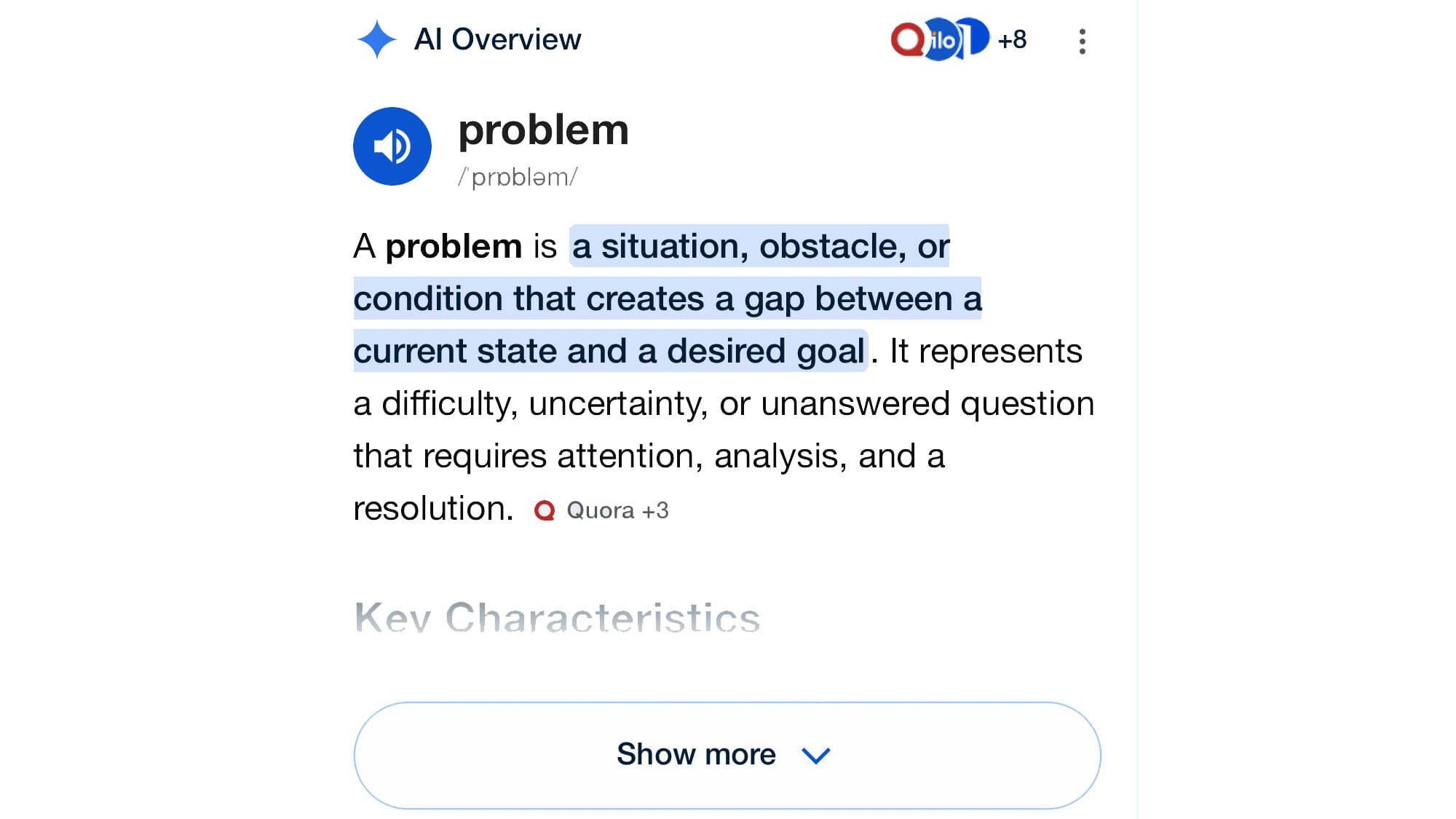
A problem is just a gap between where someone is and where they want to be.
I’ve noticed something interesting in product circles lately. Some teams seem uncomfortable with the word “problem.”
They prefer:
- opportunities
- jobs
- moments
- friction
- outcomes
- customer contexts
And I understand why.
“Problem” can sound negative. Deficit-focused. Like something is broken.
But I think we sometimes overcorrect.
A gap, not a failure
In The Concept of a Problem, Gene Agre defines a “problem”:
The gap between the current state of affairs and the desired state of affairs.
That’s it. A gap.
Not failure. Not incompetence. Not catastrophe.
Just a mismatch between where someone is and where they want to be.
Not all problems are painful
A therapist spending 3 hours on documentation? That’s a problem.
A parent struggling to coordinate appointments? That’s a problem.
A team losing visibility as they scale? That’s a problem.
A musician wanting to share ideas faster? Also a problem.
Some are inconvenient. Some are emotional. Some are aspirational. Some are about delight, speed, creativity, identity, or status.
Why I still like the word
The reason I still like the word “problem” is because it forces clarity.
It asks: What gap are we actually trying to close?
And in product development, that question matters enormously.
I’ve seen plenty of teams replace the word “problem” with softer language while still building things nobody needed.
Changing the vocabulary doesn’t automatically improve the thinking.
Ironically, many of the best product teams in the world are deeply problem-focused even if they avoid the word itself. They obsess over:
- workflow friction
- unmet needs
- abandoned tasks
- bottlenecks
- confusion
- delays
- emotional tension
Those are all just different flavors of problems.
What problem-first means
To me, “problem-first” was never about negativity.
It was about humility.
Starting with:
Before we fall in love with a solution, are we sure we deeply understand the gap?